When Your Business Is Running You Instead of the Other Way Around
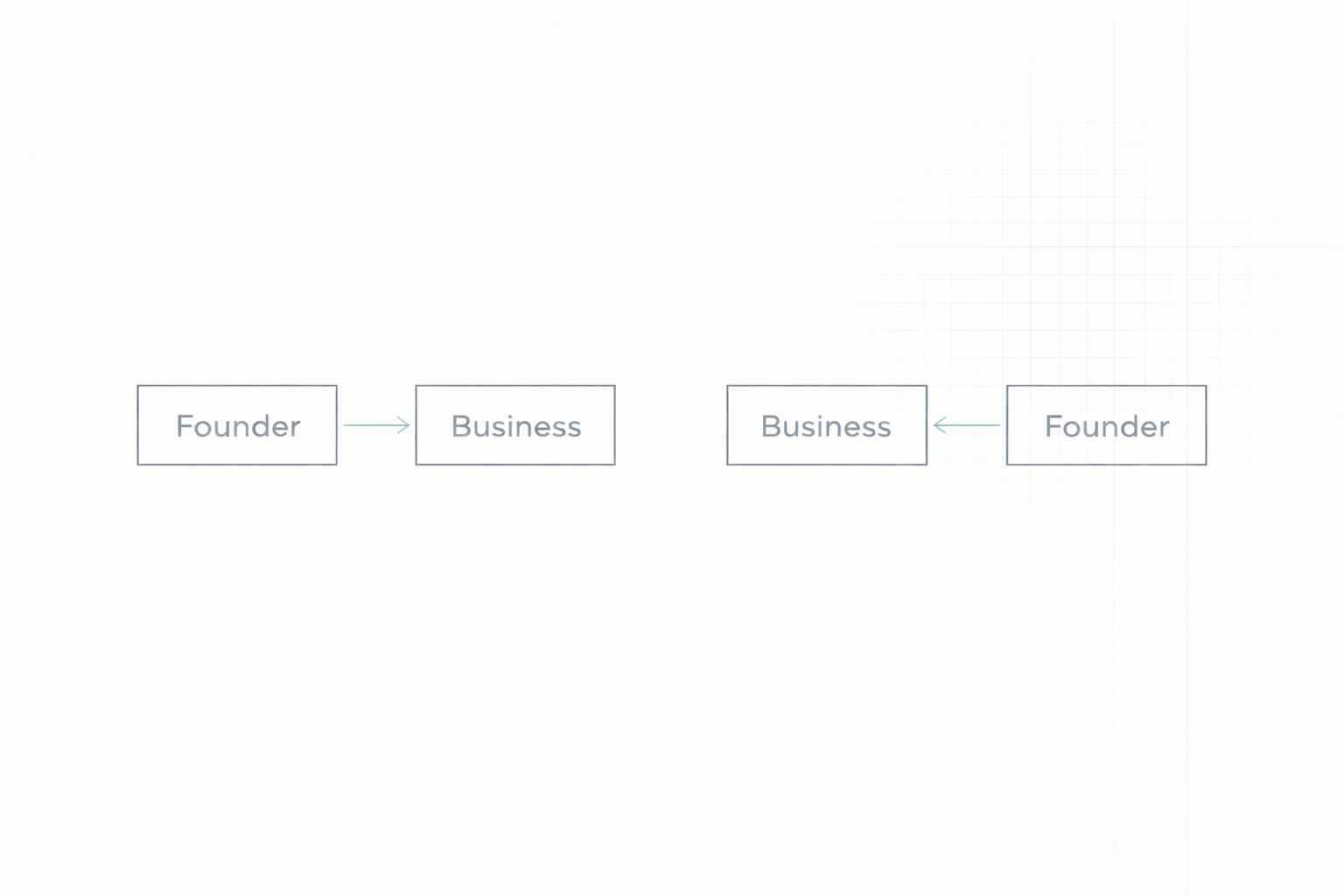
Many founders start their business expecting more freedom.
Freedom to choose how they work.
Freedom to decide their direction.
Freedom to shape their days.
Yet a few years in, many discover something unexpected.
The business they built now seems to dictate:
- their schedule
- their attention
- their energy
Instead of feeling like the owner of the business, it can begin to feel like the business owns them.
This doesn’t happen because founders make bad decisions.
It happens because most businesses are never deliberately designed.
They simply evolve.
Most Businesses Are Built by Reaction
In the early stages of a business, speed matters more than design.
You take opportunities when they appear.
You say yes to clients who need help.
You adapt to whatever the market demands.
That approach is necessary to survive.
But over time, something subtle happens.
The business becomes a collection of decisions made under pressure rather than a system built intentionally.
Services get added because a client asked for them.
Responsibilities stay with the founder because it feels faster.
Processes evolve informally rather than being designed.
Eventually, the business works.
But it works in a way that was never consciously chosen.
When Flexibility Turns Into Permanent Availability
One of the biggest promises of entrepreneurship is flexibility.
You imagine choosing your working hours.
Controlling your calendar.
Working on the things that matter most.
Yet many founders experience the opposite.
They become more available than ever.
Messages arrive constantly.
Decisions keep flowing toward them.
Their calendar fills with operational discussions.
The business doesn’t stop moving just because the founder wants to step away.
Without deliberate design, flexibility quietly turns into permanent availability.
The Question Most Founders Never Stop to Ask
At some point, a deeper question begins to appear.
Not about revenue.
Not about growth.
But about life.
What kind of life is this business actually supposed to support?
Not in vague terms like “more freedom”.
But in real, practical terms:
- How much energy should work require most days?
- What role should the founder play in the business?
- What should a normal week look like?
- What trade-offs are no longer acceptable?
Most founders never stop long enough to ask these questions.
The business simply keeps expanding into whatever space is available.
Designing a Business Around Life, Not Just Revenue
Growth is important.
Revenue matters.
But when revenue becomes the only design input, something important gets lost.
The business grows.
But the founder’s life becomes narrower.
Designing the business around life introduces different considerations:
- sustainable energy
- decision quality
- mental space
- leadership clarity
- long-term enjoyment
This doesn’t reduce ambition.
It sharpens it.
Because growth begins to serve the life you want, rather than replacing it.
Why Redesigning the Business Feels Uncomfortable
For many founders, redesigning their business is harder than growing it.
Growth is familiar.
Redesign requires confronting uncomfortable questions.
You may need to:
- let go of services you once depended on
- change how decisions flow through the company
- stop being involved in areas you used to control
It can feel easier to optimise the existing structure than to question it.
But without redesign, the business often continues expanding in ways that pull the founder deeper into operations.
The Moment Everything Changes
A powerful shift happens when founders start asking a different question.
Instead of asking:
“How do I grow this business?”
They begin asking:
“How should this business work for the life I want to live?”
That question changes the direction of decisions.
It changes how roles are defined.
It changes what growth means.
It changes the structure of the business itself.
And slowly, the relationship between the founder and the company begins to rebalance.
A Question Worth Sitting With
If you were designing your business today, from scratch, around the life you want to live now…
what would be different?
Not just in revenue goals.
But in:
- your role
- your responsibilities
- your weekly schedule
- your level of involvement
Most founders already know the answer when they ask the question honestly.
That’s often where real change begins.
If this resonates, the Life Alignment Workshop explores how founders redesign the relationship between their business, their time, and the life they want to build.
-----
This is often why founders begin searching for work-life balance, even though the deeper issue is usually structural. If you want to explore that further, read why work-life balance doesn’t work for founders.